For most of publishing history, accessibility was a problem that only large houses had the resources to solve. Audiobooks required professional narrators and studio time. Large-print editions demanded separate print runs. Alt-text for illustrated books needed specialized consultants. For indie authors working with tight budgets and tighter timelines, these weren't realistic options—they were distant aspirations.
That's changed. Quietly but meaningfully, AI tools have collapsed the cost and complexity of accessible publishing. Authors who once had to choose between reaching disabled readers and staying solvent can now do both. Here's how to make that work in practice.
Start With Your Manuscript
Accessibility begins at the writing stage, not the production stage. AI writing assistants like ProWritingAid and Hemingway Editor can flag sentence complexity, passive constructions, and dense paragraph structures—all of which affect readability for readers with cognitive disabilities, dyslexia, or low vision who rely on text-to-speech software.
When your prose is syntactically clean, screen readers render it more accurately. A convoluted sentence that a sighted reader can visually parse becomes a maze for a screen reader user. Running your manuscript through a readability checker before you finalize it costs nothing but a few hours and pays dividends across your entire audience—not just disabled readers.
If you write fiction with heavy dialogue, check how your attribution reads aloud. Tools like Natural Reader let you paste in a chapter and hear it through a text-to-speech engine. You'll catch problems you'd never notice reading silently: character names that sound identical, attribution that's ambiguous at speed, scene breaks that don't translate to audio.
Audiobook Production Without the Studio
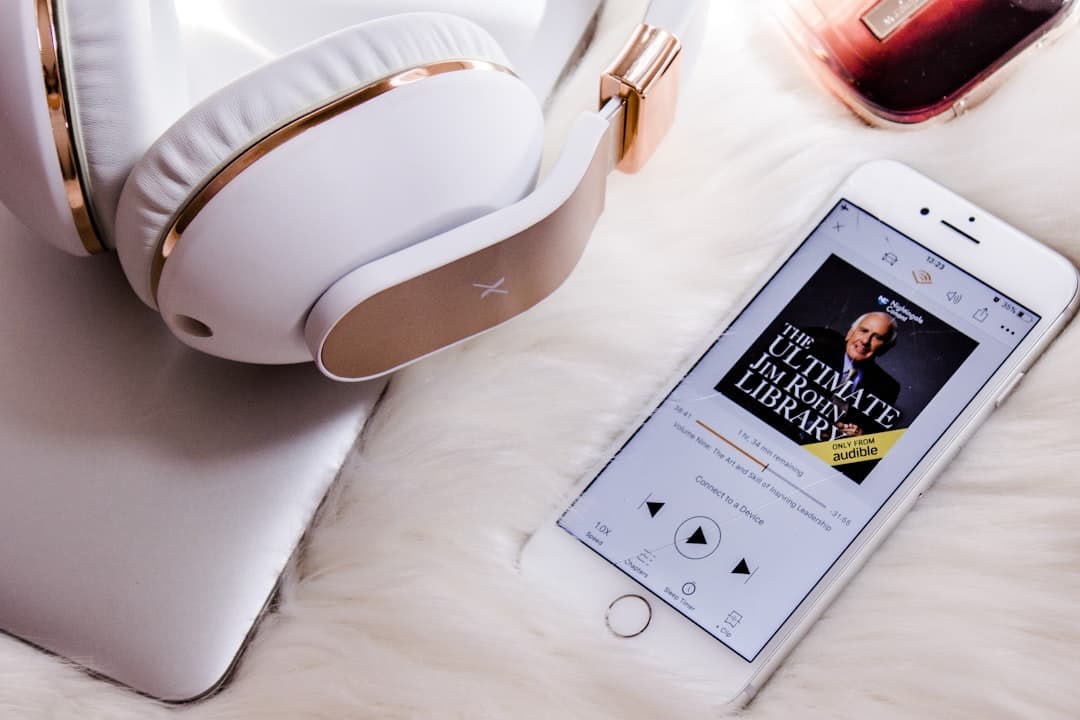
AI narration has matured faster than almost anyone predicted. Platforms like ElevenLabs, Speechify Studio, and Amazon's AI narrator through ACX now produce voices that are genuinely listenable—not the robotic monotone of five years ago. For indie authors who can't afford a professional narrator, these tools represent a real path to the audiobook market.
A few honest caveats: AI narration still struggles with highly stylized prose, poetry, and books that depend on tonal nuance. If your novel lives and dies on voice, a human narrator remains the gold standard. But for nonfiction, genre fiction, and middle-grade titles, AI narration is increasingly viable.
The practical workflow: export your final manuscript as a clean Word document or plain text file, run it through your chosen platform, then listen through the entire output—don't assume it rendered correctly. Proper nouns, foreign words, and unusual names often need phonetic correction. Most platforms offer pronunciation dictionaries where you can flag these in advance.
Ebook Formatting That Works For Everyone
An accessible ebook isn't just a nice-to-have—it's increasingly a legal and commercial expectation. The European Accessibility Act comes into effect in 2025, and while it primarily targets EU markets, its influence on global distribution standards is already being felt.
Tools like Sigil (free, open-source) and Vellum (Mac only, paid) let you build EPUB files with proper semantic markup—heading hierarchies, chapter landmarks, and reading order tags that screen readers depend on. If you're using Vellum, it handles most of this automatically. If you're formatting manually in Sigil, the DAISY Consortium's free guidelines are your reference document.
Images are where most indie ebooks fall short. Every illustration, map, chart, or decorative chapter header needs alt-text—a brief description of what the image contains and why it matters to the reader. AI image-description tools like Microsoft's Seeing AI or Google's image captioning API can generate draft alt-text, which you then edit for context and accuracy. A map of your fantasy world needs different alt-text than a decorative flourish; the AI draft gets you started, but your editorial judgment finishes the job.
Large Print and Beyond
Large-print editions are a genuine revenue stream that most indie authors ignore entirely. Readers with low vision, older readers, and anyone recovering from eye surgery represent a substantial and underserved market on Amazon and IngramSpark.
Formatting a large-print edition used to mean rebuilding your entire interior file. AI-assisted layout tools like Affinity Publisher (with its master page system) and even Canva Pro's book templates let you create a 16-point or 18-point version of your interior without starting from scratch. The key formatting rules: at least 16pt font, 1.5x line spacing minimum, generous margins, and matte paper stock if you're going print-on-demand.
The Market Case
Let's be direct about the business logic, because accessibility is sometimes framed purely as altruism—and it's more than that. In the United States alone, roughly 26% of adults live with some form of disability. The global audiobook market is projected to exceed $35 billion by 2030. Readers who depend on accessible formats are loyal, vocal, and often underserved by mainstream publishing.
When you publish an audiobook, a large-print edition, and an accessible ebook alongside your standard formats, you're not just doing right by disabled readers. You're entering markets with less competition and readers who will recommend your book to others with similar needs.
Where To Begin
If this feels like a long list, start with one thing: run your next ebook through an EPUB accessibility checker (the free Ace by DAISY tool is the industry standard) and fix what it flags. Then add alt-text to your images. Then listen to a chapter through a free text-to-speech app.
Accessibility doesn't require perfection on day one. It requires direction—a commitment to making each book more open than the last. The tools exist. The readers are waiting. The only thing left is to begin.