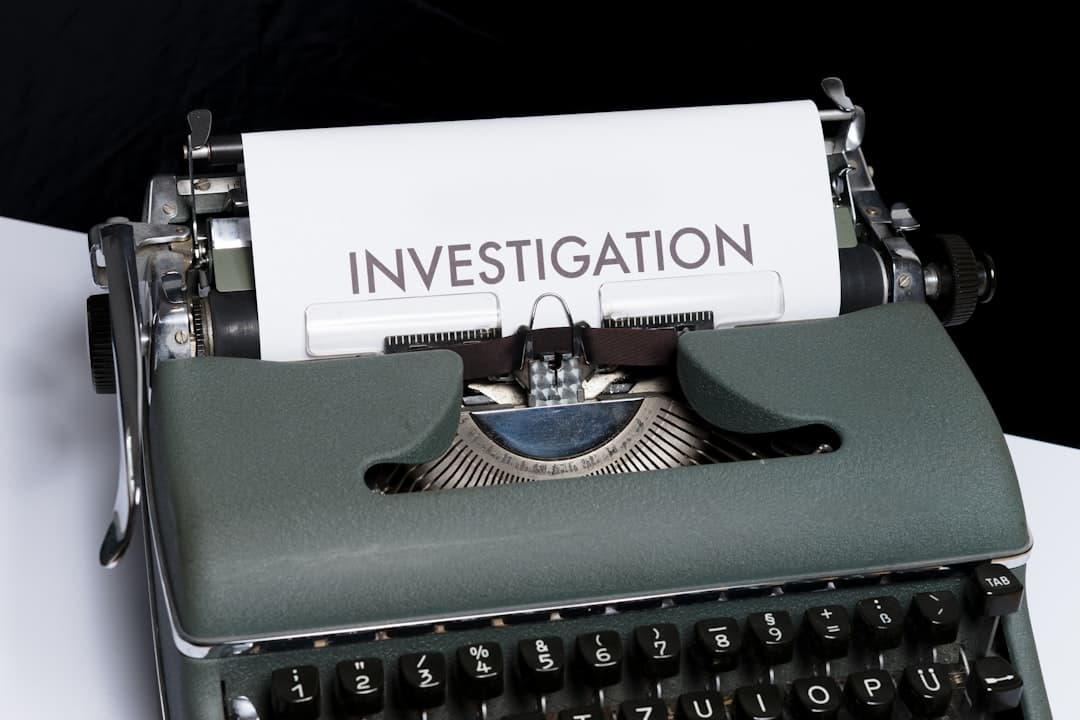
Whether you're writing long-form nonfiction, producing a podcast series, or editing a feature manuscript, the backbone of strong investigative work is process. The reporters who consistently break significant stories aren't simply lucky — they follow repeatable methods that any writer can learn and apply.
Start With a Paper Trail
Every investigation begins with documents. Court records, financial filings, property deeds, government contracts, and corporate registrations are all publicly accessible in most jurisdictions. Before scheduling a single interview, experienced investigators spend hours — sometimes days — combing through paper and digital records to establish a factual baseline.
In the United States, Freedom of Information Act (FOIA) requests give journalists and researchers access to federal agency records. Most states have equivalent open-records laws. Filing these requests early matters because agencies often take weeks or months to respond. Sending requests at the start of a project, rather than midway through, keeps timelines on track.
Build a Source Network Deliberately
Sources are not simply people who return phone calls. Skilled investigators categorize their sources by function: primary sources who have direct knowledge of events, secondary sources who can corroborate or contextualize, and expert sources who interpret technical or specialized information.
The most productive sources are often found at the edges of an organization — former employees, contractors, lower-level staff, or people who once held central roles but have since moved on. These individuals frequently hold detailed institutional knowledge and may have fewer reasons to protect the official narrative.
Cold outreach works. A brief, direct message that explains the nature of the inquiry — without revealing the full scope of the investigation — tends to generate more responses than vague requests. Following up once or twice after no reply is standard practice, not pushiness.
Verify Everything at Least Twice
A single source confirming a claim is a starting point, not a finish line. The two-source standard — requiring at least two independent confirmations before publishing a fact — exists because memory is fallible, motivations vary, and errors compound. For claims that carry significant consequences for named individuals, three or more independent sources offer stronger protection.
Documents should be authenticated rather than assumed genuine. Cross-referencing dates, names, and figures against other records catches inconsistencies. When a document cannot be independently verified, that uncertainty belongs in the story.
Use Structured Interviews
Investigative interviews differ from conversational ones. Reporters prepare questions in order of escalating sensitivity — beginning with neutral, factual topics before moving toward contested or uncomfortable ground. This approach builds rapport and gives the source time to settle before reaching the questions that matter most.
Recording interviews, with the subject's knowledge and consent where required by law, protects both parties. Verbatim transcripts prevent misquotation disputes and allow editors to assess context around any given quote.
Giving subjects who face criticism the opportunity to respond before publication is both an ethical standard and a legal protection. Their response — or refusal to respond — becomes part of the record.
Map Relationships and Timelines
Complex investigations involve overlapping people, organizations, and events. Maintaining a visual map of how entities connect — and a separate chronological timeline of events — prevents contradictions from slipping through during the writing process.
Simple tools work. A whiteboard, a spreadsheet, or a dedicated notebook page dedicated entirely to the timeline allows writers and editors to spot gaps in the narrative before the draft reaches publication.
Know When to Stop Digging
Not every lead produces usable material. Skilled investigators recognize when a line of inquiry has been exhausted and redirect effort toward stronger threads. Time spent chasing a dead end is time not spent strengthening the core story.
The stories that hold up over time — and survive legal scrutiny — are the ones built on documented, verified, multi-sourced foundations. The methods behind them are neither glamorous nor mysterious. They are consistent, careful, and repeatable.
This article is based on a primary source and has undergone editorial review prior to publication.


