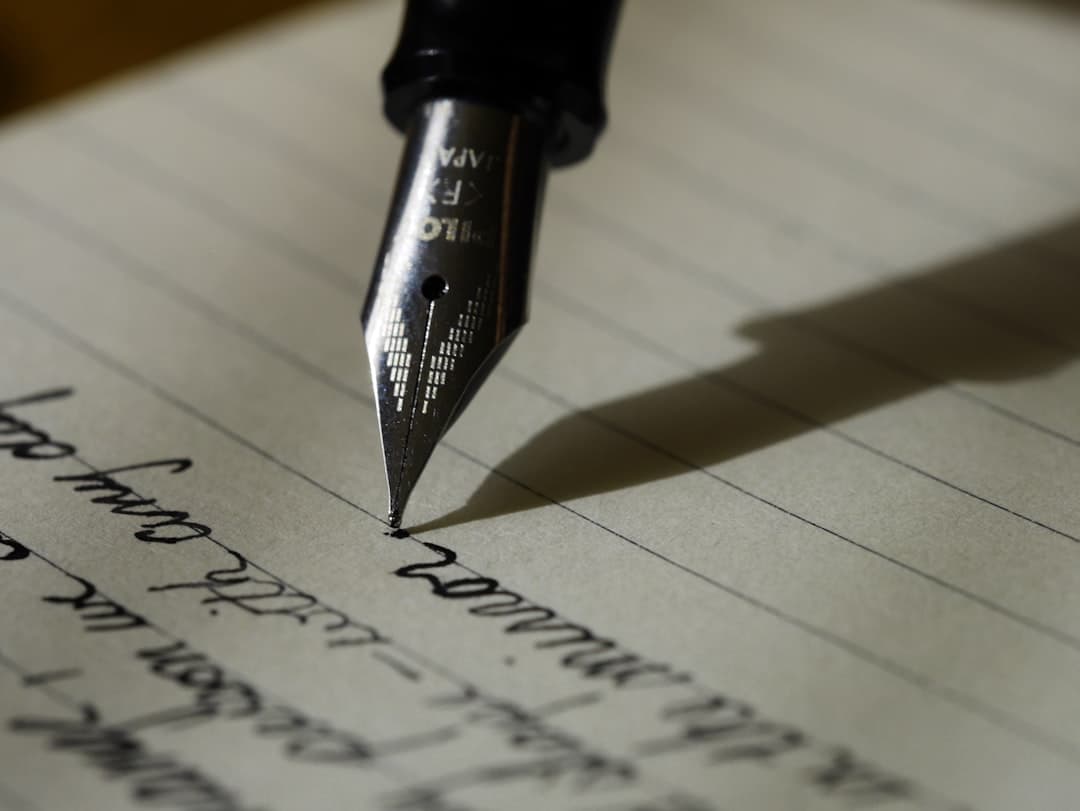
Writing well is less about inspiration and more about method. The authors, editors, and publishing professionals who produce consistently strong work tend to share a common toolkit — a set of deliberate practices applied at every stage of the writing process. What follows is a breakdown of those techniques, grounded in how professional writers actually use them.
Control the Sentence Before You Control the Page
Every piece of writing is built sentence by sentence. Writers who struggle at the macro level — with structure, pacing, or clarity — often find the source problem lives in the sentence itself. Vague subjects, weak verbs, and passive constructions drain energy from prose before the reader even reaches the next paragraph.
A practical correction: rewrite any sentence where the subject is not doing the action. Replace forms of "to be" with active, specific verbs wherever the meaning allows. Read sentences aloud. If a sentence requires a second reading to land its meaning, it needs revision — not the reader's patience.
Use Scene and Summary With Intention
Narrative writing moves between two modes: scene (showing events in real time with dialogue, detail, and action) and summary (condensing time or information). Both are necessary. The mistake most writers make is using the wrong mode at the wrong moment.
Emotionally significant events earn scene. Transitional information — travel, the passage of time, background context — belongs in summary. When writers render every moment as a scene, pacing collapses. When they summarize the moments that matter most, emotional impact disappears. Identifying which mode each section requires is a skill that develops through deliberate revision.
Revision Is the Work, Not the Aftermath
Many writers treat revision as a finishing step — a polish applied once the draft is complete. Working professionals treat it as the primary craft. The first draft locates the material. Revision shapes it.
A structured revision process separates concerns across multiple passes: one pass for structure and logic, one for scene and pacing, one for voice and line-level clarity, and a final pass for copy. Trying to address all of these simultaneously produces unfocused editing. Separating them produces measurable improvement at each level.
Develop an Ear for Rhythm
Prose rhythm operates below conscious awareness for most readers, but they feel it. Sentences of identical length and structure create monotony. Varied sentence rhythm — short punches followed by longer, more expansive constructions — controls how a reader moves through a page.
Reading work aloud remains the most reliable diagnostic tool for rhythm. Where the voice stumbles, the sentence needs adjustment. Where it rushes, a beat may be missing. Poets understand this instinctively. Prose writers who study poetry, even briefly, tend to bring stronger rhythmic awareness to their sentences.
Specificity Over Generality, Always
Concrete, specific detail does more work than abstract description in almost every context. "A worn leather chair" lands differently than "comfortable furniture." "She called at 2 a.m. three nights in a row" carries more weight than "she kept calling." Specificity builds credibility, creates imagery, and communicates character — often simultaneously.
This applies beyond fiction. In essays, journalism, and narrative nonfiction, precise detail is what separates memorable writing from forgettable writing. The instinct to generalize often comes from uncertainty about the material. Specificity requires knowing the subject well enough to choose the right detail.
Read as a Writer
Every book a writer reads is also a craft lesson. Reading as a writer means pausing to examine how an effect is achieved — how a chapter ending creates momentum, how a character is introduced with economy, how a paragraph earns its final line. This analytical layer does not diminish pleasure; over time, it deepens it.
Keeping a craft notebook alongside reading — logging observations about technique, structure, and language — builds a personal reference that compounds in value over years of practice. The writers who develop fastest are almost always the ones who read with this level of attention.
This article is based on a primary source and has undergone editorial review prior to publication.


