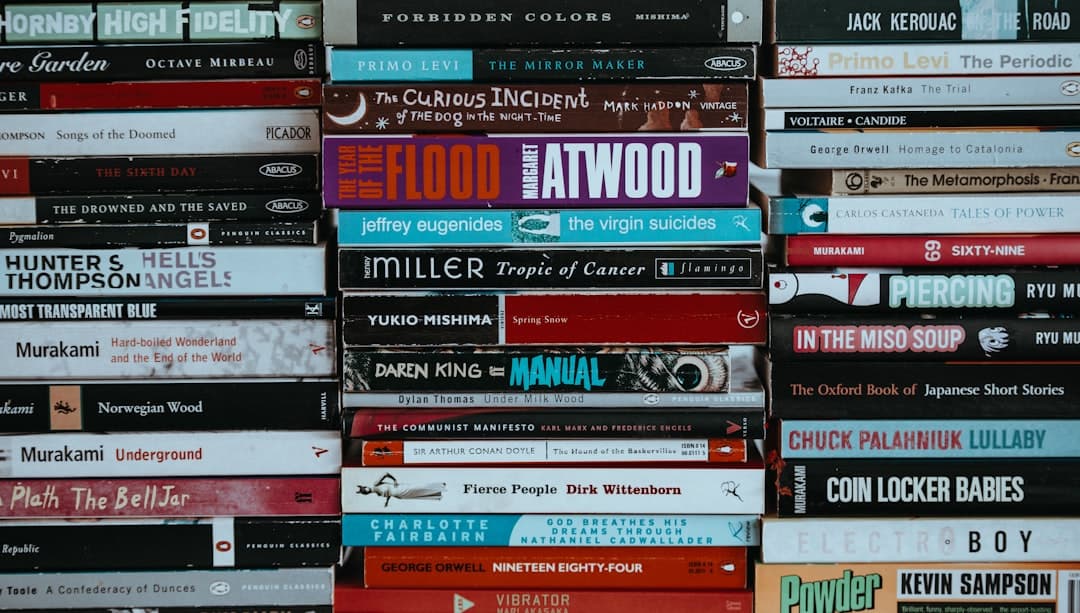
The books that shape working literary professionals are rarely the ones dominating award shortlists or airport displays. They tend to circulate through writers' rooms, editorial meetings, and agency inboxes — passed along with a quiet confidence that the reader will understand why. The titles gathered here represent exactly that kind of underground currency.
Fiction That Rewards Close Reading
Housekeeping by Marilynne Robinson, first published in 1980, remains one of the most structurally precise American novels ever written, yet it rarely appears on craft syllabi. Robinson's use of accumulated image — the lake, the light, the persistent threat of transience — demonstrates how a single sustained metaphor can carry an entire narrative without ever becoming heavy-handed. Editors working with literary fiction will find its restraint instructive.
The Hearing Trumpet by Leonora Carrington is another example. Published in 1974, it operates in a register somewhere between surrealism and fable, and it handles point of view with a consistency that many contemporary novels struggle to maintain. For agents evaluating unusual manuscripts, this novel provides a useful benchmark for what committed strangeness looks like at the sentence level.
Nonfiction That Teaches Structure
John McPhee's The Deltoid Pumpkin Seed is not his most cited work, but it may be his most quietly instructive. The 1973 account of an experimental aircraft project demonstrates how to build tension from technical subject matter — a challenge nonfiction writers face constantly. McPhee's ability to make engineering emotionally urgent offers a direct model for writers covering science, business, or policy.
For those working in memoir or personal essay, The Collected Essays of James Baldwin — particularly the pieces outside Notes of a Native Son — contain structural moves that repay careful study. Baldwin's habit of widening from the personal to the political without losing intimacy is a technique most writing programs discuss but rarely anatomize at the sentence level.
Short Story Collections Worth Studying
Grace Paley's Enormous Changes at the Last Minute (1974) handles narrative compression better than almost any collection in the American canon. Her stories end before readers expect them to, and they are better for it. Short story writers and the editors who work with them will benefit from tracking exactly where Paley chooses to stop — and why each stopping point feels earned rather than abrupt.
Joy Williams' Taking Care (1982) works differently. Her endings are often unresolved in ways that feel deliberate rather than evasive, which makes the collection a useful reference point for discussing the difference between ambiguity and incompletion with authors during revision.
Where to Source These Titles
Several of these books cycle in and out of print. Independent publishers including New York Review Books Classics, Dalkey Archive Press, and Archipelago Books maintain backlists that include overlooked titles across all three categories above. Library systems with interlibrary loan programs can surface nearly any title within two weeks. For editorial professionals building reference libraries, sourcing through these channels also keeps smaller presses financially viable — a practical consideration given how much of the interesting literary work currently originates there.
A Note on Reading as Professional Development
Literary professionals who read widely outside current releases develop a sharper eye for structural originality versus structural imitation. When a debut novelist submits a manuscript that uses an unusual frame narrative, the editor who has read Housekeeping and The Hearing Trumpet has concrete reference points for evaluating whether that choice is working. The same applies to agents assessing commercial viability — understanding what a technique has accomplished historically sharpens the instinct for whether it is being deployed effectively in new work.
The books listed here are starting points, not a complete inventory. Each one points outward toward other overlooked titles in the same tradition, and that outward pointing is precisely the value they carry.
This article is based on a primary source and has undergone editorial review prior to publication.