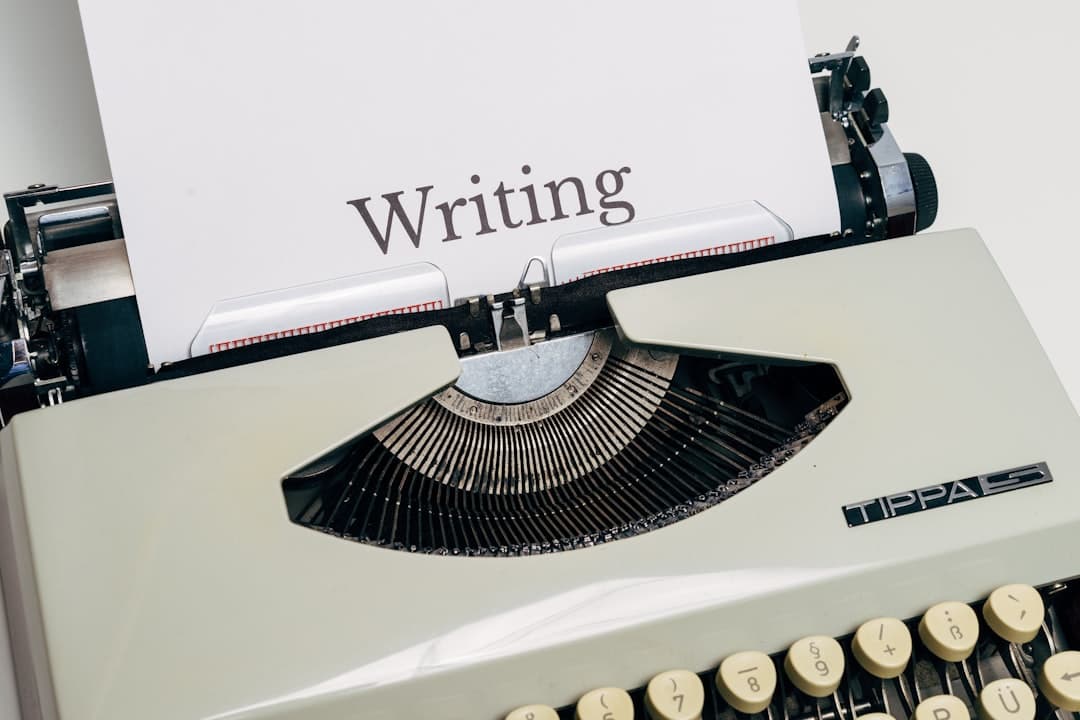
Writing in 2026: A Profession and a Practice in Transformation
The craft of writing is undergoing one of its most significant transformations in decades. Across industries — from journalism and publishing to education and marketing — the tools, habits, and expectations surrounding written communication have shifted dramatically by 2026, driven largely by advances in artificial intelligence, collaborative technologies, and changing audience behavior.
AI as Co-Author: Collaboration, Not Replacement
Perhaps the most defining development is the mainstream adoption of AI writing assistants. Tools powered by large language models are now embedded in word processors, content management systems, and email clients. Rather than replacing human writers, these tools have largely taken on the role of first-draft generators, grammar enhancers, and tone advisors — freeing professionals to focus on voice, argument, and originality.
Publishers and newsrooms have introduced formal AI-use disclosure policies, following pressure from readers and regulatory bodies in Europe, the United States, and increasingly across Latin America. In countries like Brazil and Argentina, media regulators have begun drafting transparency guidelines requiring outlets to label AI-assisted content, a shift that reflects growing public concern about authenticity and misinformation.
The Rise of Multimodal and Conversational Writing
Writing itself is also changing in form. The boundary between written content and other media formats has blurred significantly. "Multimodal writing" — text designed to be experienced alongside audio, visual, or interactive elements — has become standard practice in digital publishing. Long-form articles are increasingly paired with AI-generated audio narration, embedded data visualizations, and reader-responsive summaries that adjust based on user preferences.
Short-form, conversational writing continues to dominate social platforms, but a counter-movement toward longer, more substantive prose has also gained ground, particularly among newsletter writers and independent journalists who have built loyal subscriber bases on platforms such as Substack and its Latin American equivalents.
Education and the Question of Authorship
Universities and schools across South America and the world are still grappling with questions of authorship and academic integrity in the age of AI. Institutions have largely moved away from blanket bans on AI tools, instead developing frameworks that distinguish between AI-assisted and AI-generated work. Writing curricula now increasingly emphasize critical thinking, editing, and the distinctly human skill of argumentation — qualities that AI tools, as capable as they are, still struggle to replicate consistently.
Localization and Linguistic Diversity
One significant opportunity that 2026 has brought to the region is improved AI support for Spanish and Portuguese in their many regional varieties. Earlier generations of AI writing tools were heavily biased toward North American English; updated models now handle Rioplatense Spanish, Brazilian Portuguese, and indigenous language integration with considerably greater accuracy — opening doors for writers and educators in communities that were previously underserved by these technologies.
Looking at the Broader Picture
The writing profession in 2026 is neither the dystopia some feared nor the effortless utopia others promised. It is a more complex, hybrid practice — one where human judgment, cultural nuance, and ethical responsibility remain as essential as ever, even as the tools evolve at an unprecedented pace. For South American writers, journalists, and educators in particular, the challenge and the opportunity lie in shaping these technologies to reflect their own voices and realities, rather than simply adopting frameworks designed elsewhere.
This article is based on a primary source and has undergone editorial review prior to publication.