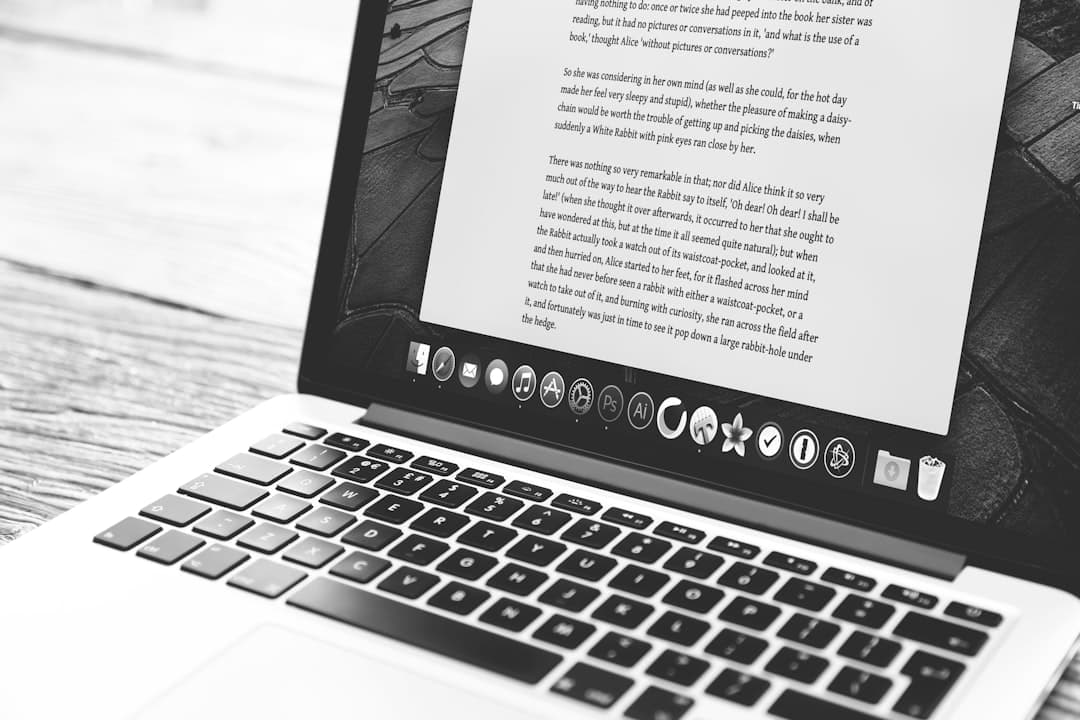
The image of a writer hunched over a typewriter has largely given way to something more complex: multiple monitors, synced devices, subscription apps, and carefully engineered digital environments designed to protect creative time and streamline output. Across genres and career stages, authors are building tech-assisted workflows that help them move from blank page to finished manuscript with fewer interruptions and greater consistency.
Drafting and Focus Tools
Many authors separate their drafting environment from the internet-connected tools they use for research and communication. Applications like Scrivener remain a staple for long-form writers because they allow users to store research, outline chapters, and draft within a single project file. The corkboard and outlining features are particularly useful for novelists managing multiple plot threads or nonfiction writers organizing dense research material.
For authors who find standard word processors too distracting, distraction-free writing apps such as iA Writer and Draft offer stripped-back interfaces with minimal menus and no formatting clutter. These tools are designed around a single goal: keeping writers in the text.
Focus apps like Freedom and Cold Turkey allow writers to block specific websites or the entire internet for set periods. A common workflow involves scheduling two-hour writing blocks with internet access disabled, followed by shorter research or correspondence windows with it restored.
Planning and Project Management
Authors managing multiple projects — a novel in revision, a short story on submission, an essay under contract — increasingly turn to project management platforms borrowed from the business world. Notion and Trello are frequently cited for tracking deadlines, storing submission records, and mapping out book series timelines.
Some authors use dedicated plotting software like Plottr or Campfire to build story bibles, track character arcs, and maintain continuity across long series. These tools generate visual timelines and relationship maps that serve as reference documents throughout drafting and revision.
Voice and Dictation
Dictation has moved from a niche workaround to a mainstream productivity strategy for a growing number of authors. Dragon NaturallySpeaking remains the most widely used dedicated dictation software, with accuracy rates that improve as the software learns a user's voice and vocabulary. Authors report dictating during walks, commutes, or periods when sitting at a desk is not practical, effectively adding writing time to parts of the day that would otherwise go unused.
Built-in dictation features on both Mac and Windows operating systems have also improved substantially, making voice input accessible without additional software purchases.
Revision and Editing Workflow
The revision stage has its own set of dedicated tools. ProWritingAid and PerfectIt are used by authors and editors alike to catch consistency errors, flag passive constructions, and review pacing at the sentence level. These tools do not replace human editing, but they reduce the surface-level errors that a developmental or copy editor would otherwise spend time addressing.
Version control — tracking changes across multiple drafts — is another area where technology has helped professional authors. Some writers use Git repositories, borrowed from software development, to maintain a complete revision history of their manuscripts. More commonly, cloud storage platforms like Google Drive or Dropbox provide automatic version histories that allow writers to retrieve earlier drafts without managing files manually.
Reading and Research
Authors conducting research have access to tools that compress what once took weeks into a matter of hours. Reference management software like Zotero allows writers to save, organize, and cite sources across a project. Kindle and e-reader apps let authors annotate and search across dozens of reference books without physical shelf space.
Text-to-speech tools, meanwhile, allow authors to listen back to their own manuscripts during the revision stage — a technique many find more effective than reading silently for catching awkward phrasing and rhythm problems.
Consistency Over Novelty
Across all of these categories, the authors who report the most productivity gains share one common trait: they choose a small set of tools and use them consistently rather than cycling through new applications. Technology supports the work; the discipline to show up and write remains the foundation.
This article is based on a primary source and has undergone editorial review prior to publication.