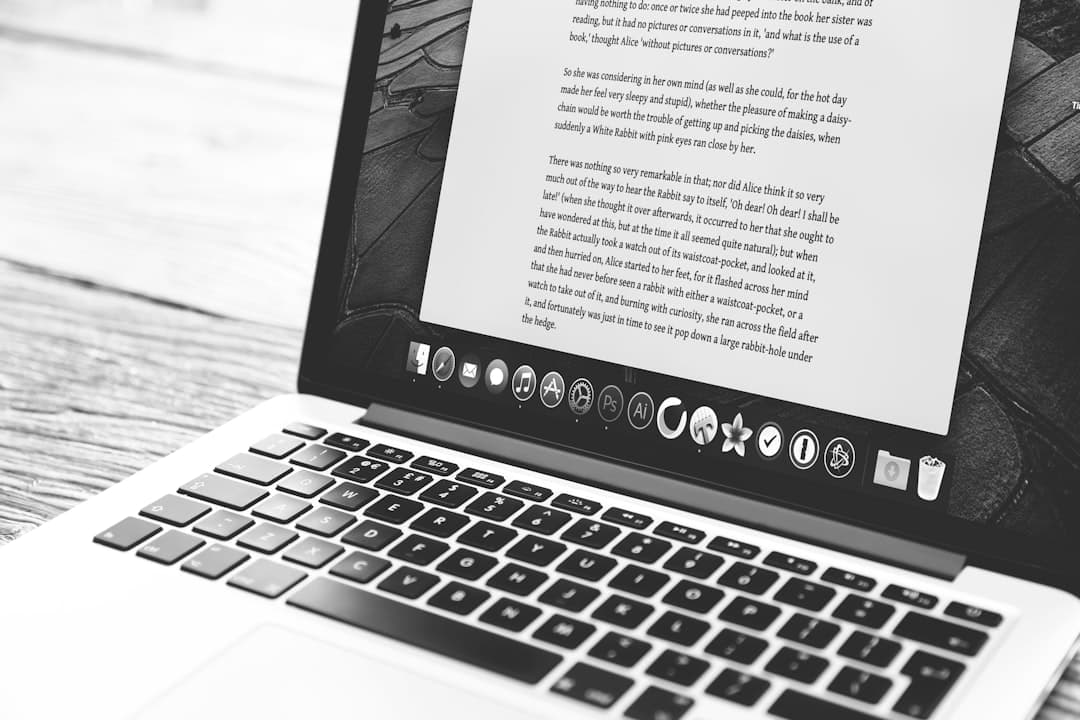
The publishing world has always adapted to new tools — from the printing press to word processors to digital submission platforms. What's different now is the pace. Several technologies have matured enough this year to move from curiosity to genuine utility for working writers and publishing professionals.
Drafting and Focus Environments
Longhand writing software has seen a quiet resurgence, with platforms like iA Writer and Ulysses refining their distraction-free interfaces to include better organizational architecture. Both now support nested folder structures and cross-device syncing robust enough for long-form projects — novels, narrative nonfiction, and serialized work. For writers who previously juggled between a drafting app and a document manager, these updates reduce that friction significantly.
Scrivener's continued development of its iOS and macOS versions has also closed several long-standing gaps between desktop and mobile functionality, making it more viable for writers who draft across multiple devices throughout the day.
Research and Reference Tools
Research has traditionally consumed a disproportionate share of a writer's time. Several tools now address this directly. Notion and Obsidian have both developed stronger linking and tagging systems that allow writers to build interconnected research vaults — essentially a personal database of notes, sources, and ideas that surfaces relevant material as a project grows.
For journalists and nonfiction authors, Perplexity AI has emerged as a search-adjacent tool that provides cited, source-linked answers rather than raw search results. It does not replace primary research or original reporting, but it accelerates the early-stage fact-gathering process and helps writers identify which sources warrant deeper investigation.
Editorial and Revision Technology
ProWritingAid and Hemingway Editor have both updated their core engines to offer more granular feedback on pacing, sentence variation, and passive voice patterns. These tools function as a first-pass editorial layer — useful for self-editing before a manuscript reaches a human editor.
PerfectIt, long favored by professional editors and publishers, has expanded its style guide integrations, now supporting custom house style sheets alongside established guides like Chicago and AP. For editorial departments managing multiple authors across a publication or imprint, this reduces the time spent on consistency checks during copyediting.
Submission and Rights Management
The administrative side of a writing career has historically been handled through spreadsheets and email threads. Platforms like Duotrope and The Submission Grinder continue to serve short fiction and poetry markets, but a newer entrant — Publishers Marketplace's updated rights tracking dashboard — has given literary agents and rights managers a more structured way to monitor subsidiary rights activity across territories.
For independent authors managing their own rights across multiple retailers and distributors, Draft2Digital has expanded its universal book links and payment consolidation features, reducing the number of platforms a self-published author needs to monitor regularly.
Audio and Accessibility Formats
The audiobook market continues to grow, and production tools have followed. Descript now allows authors to record, edit, and clean audio narration within a single interface, using text-based editing — meaning a writer can cut a verbal stumble by deleting words from a transcript rather than scrubbing through a waveform. For authors producing their own audiobooks or podcast-style content, this lowers the technical barrier considerably.
ACX, Amazon's audiobook production platform, has also updated its royalty share matching system, making it easier for authors to connect with narrators for co-produced projects without upfront recording costs.
What to Prioritize
No single tool solves every problem, and the most effective approach remains selecting technology that addresses a specific friction point in your existing workflow rather than adopting tools wholesale. Writers who draft prolifically but struggle with organization benefit most from vault-style research tools. Those in late-stage revision gain more from editorial software. Publishing professionals managing multiple projects should look first at submission tracking and rights management platforms.
The common thread across all of these developments is specificity — each tool has grown more focused on solving a defined problem rather than attempting to replace the full writing process. That narrowing of scope, more than any single feature, is what makes this generation of writing technology practically useful.
This article is based on a primary source and has undergone editorial review prior to publication.