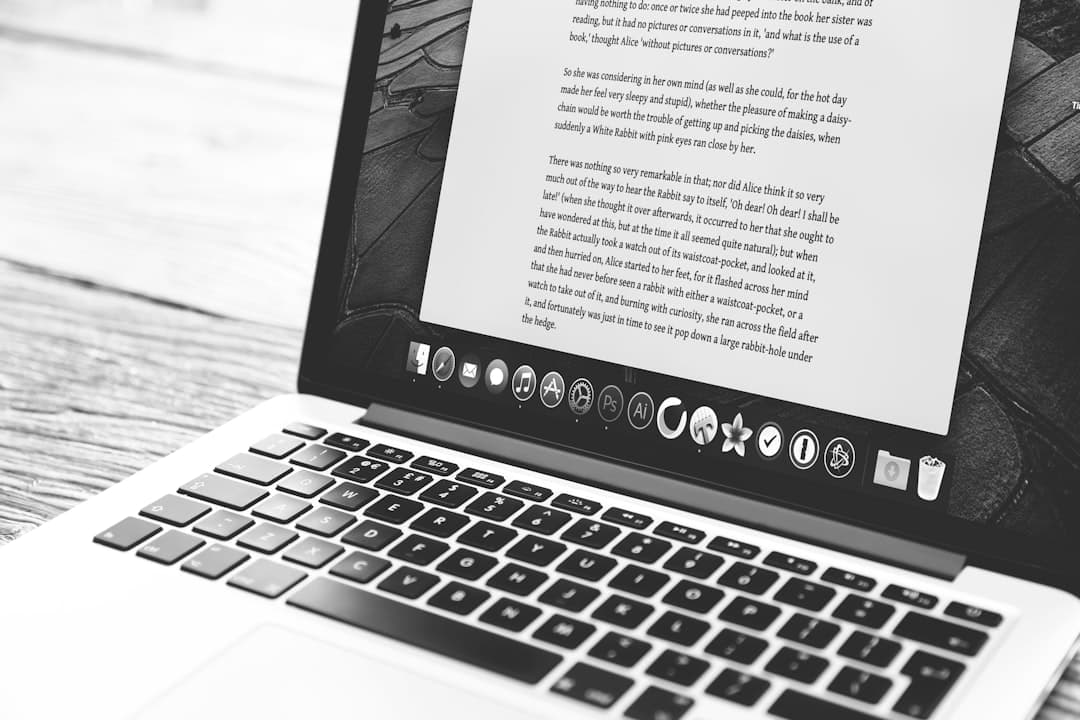
For centuries, the mechanics of storytelling changed slowly. The printing press, the typewriter, the word processor — each tool altered the workflow around stories without fundamentally disturbing what a story was. The current wave of smart technology is different. It is reaching into the structure of narrative itself.
How Writers Are Using AI-Assisted Drafting
A growing number of working authors — particularly those in genre fiction and commercial nonfiction — are incorporating AI writing assistants into their drafting process. Tools like Sudowrite, Jasper, and the writing-focused modes within ChatGPT are being used to generate first-pass scene descriptions, brainstorm plot alternatives, and break through structural blocks.
The workflow typically looks like this: a writer drafts an outline or a rough scene, feeds it to an AI tool with a specific prompt, and uses the output as raw material — not finished prose. Editors report that manuscripts produced this way still require the same depth of developmental and line editing. The AI does not replace craft. It compresses certain early-stage tasks.
Literary agents have begun noting in submission guidelines whether they accept AI-assisted work, reflecting an industry still working out its standards. The Author's Guild and the Society of Authors have both published guidance encouraging transparency from authors about the role AI played in a manuscript's creation.
Adaptive and Interactive Narrative Platforms
Beyond the drafting table, smart technology is generating entirely new story formats. Platforms such as Twine, Ink, and Ren'Py have long supported interactive fiction. What has shifted is the sophistication of branching logic and the audience for it.
Publishers including Inkle Studios and Tin Man Games have demonstrated commercially viable models for interactive narrative. Meanwhile, platforms like Episode and Choices report hundreds of millions of story plays, drawing a predominantly young adult audience. For authors interested in these formats, the practical demand is real: studios actively commission writers with experience in branching dialogue, consequence mapping, and non-linear scene sequencing.
Audio storytelling has also been transformed. Tools that convert manuscript text to high-quality synthetic narration are now accessible to independent authors, lowering the barrier to audiobook production. Audible, Spotify, and dedicated podcast networks have expanded the market for audio-first stories, including serialized fiction delivered through smart speakers.
Data and the Reader Relationship
Publishing platforms now generate detailed behavioral data about how readers move through a text — where they stop, which chapters prompt drop-off, how long they spend on specific passages. Amazon's Kindle reading data, aggregated across millions of devices, has been used internally to inform editorial feedback to authors under their imprints.
For independent authors publishing through platforms like Radish, Wattpad, or Royal Road, engagement analytics are available directly in the dashboard. Writers can see in near real-time which story beats hold attention and which lose it. This data does not dictate creative choices, but it provides a factual layer of reader feedback that previously required sales figures and reader mail to approximate.
What Editors and Agents Need to Know
The editorial skill set is evolving alongside these tools. Developmental editors working with authors who use AI assistance report a distinct pattern: strong surface-level prose with structural weaknesses underneath. The technology tends to produce fluent sentences while struggling with long-arc causality and character interiority. Editors familiar with this pattern can calibrate their notes accordingly.
Literary agents evaluating manuscripts increasingly ask direct questions about process — not to gatekeep, but to understand what they are representing. Knowing whether a book was AI-assisted affects how it is submitted, how rights conversations go, and in some territories, how copyright is interpreted.
For publishers, the operational implications are broad. Production timelines, rights clauses, author contracts, and editorial workflows are all under active revision at major houses and independent presses alike.
Smart technology has not changed what readers want from a story — emotional truth, consequence, a reason to keep turning the page. What has changed is the full landscape of how those stories get made and delivered. Writers and publishing professionals who map that landscape clearly will work through it with more confidence.
This article is based on a primary source and has undergone editorial review prior to publication.